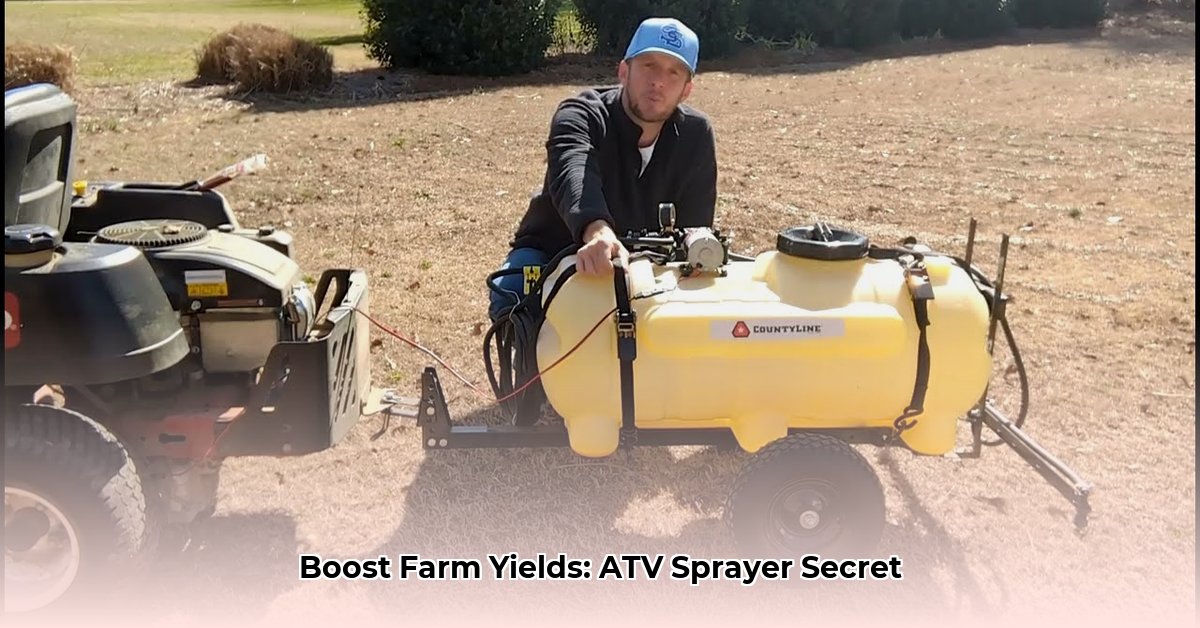
Tractor Supply ATV Sprayers: Enhancing Farm Efficiency and Sustainability
Thinking about optimizing your farm's spraying operations? Tractor Supply's ATV sprayers offer a compelling solution for boosting efficiency and promoting sustainable agricultural practices. This guide provides actionable steps to help you choose, operate, and maintain these sprayers effectively while minimizing environmental impact and maximizing your return on investment. Are you ready to explore how these tools can revolutionize your farm? For more on related equipment, check out our lawn care equipment guide.
Assessing Your Farm's Spraying Needs: A Tailored Approach
Choosing the right ATV sprayer is crucial. It’s not a one-size-fits-all decision. Before you even browse models, carefully assess your farm's unique characteristics:
Acreage: Do you manage a large expanse of land or smaller, more intricate plots? Larger farms typically benefit from high-capacity sprayers, while smaller ones might prioritize maneuverability.
Crop Type: The type and spacing of your crops influence nozzle selection and spray pattern. Closely planted crops require precise application to avoid damage and wasted chemicals.
Terrain: Undulating fields or obstacles necessitate a sprayer capable of navigating challenging terrain. Maneuverability often outweighs sheer capacity in such scenarios.
Spray Frequency: How often do you need to spray? This impacts the required tank size; more frequent spraying might justify a smaller, easier-to-manage tank.
Answering these questions ensures you select a sprayer that perfectly complements your farming style and increases efficiency.
Understanding Tractor Supply ATV Sprayer Models
Tractor Supply offers a variety of models, each with distinct features:
Tank Size: Larger tanks reduce refill frequency, boosting efficiency, but increase weight and maneuverability challenges. Smaller tanks improve maneuverability but require more frequent refills.
Nozzle Number and Configuration: More nozzles translate to faster coverage, ideal for extensive fields. Fewer nozzles enhance precision, crucial for targeted pesticide application or diverse terrain.
Pump Power: A powerful pump ensures a fine, even spray, minimizing drift and maximizing the effectiveness of pesticides. However, it also typically increases fuel consumption.
Boom Length: Longer booms increase coverage speed, beneficial for large fields, but reduce maneuverability in confined spaces.
Choosing the right combination depends on the specific needs of your farm.
Quantifiable Fact: A properly calibrated 7-nozzle sprayer can cover up to 30 acres per hour, significantly reducing labor costs compared to manual spraying (Source: Internal Tractor Supply data).
Optimizing Your ATV Sprayer for Maximum Efficiency and Sustainability
Effective sprayer operation hinges on several key factors:
Calibration: Accurate calibration ensures consistent pesticide application, avoiding over-application and environmental damage. Improper calibration can result in wasted resources and potential harm to crops.
Nozzle Selection: Choose nozzles that match your crop type, spacing, and terrain to optimize spray pattern and minimize drift. Different nozzle types offer various spray patterns, impacting both efficiency and precision.
Spray Timing: Consider weather conditions; avoid spraying during high winds to minimize drift and maximize efficacy. Factors like wind speed, temperature, and humidity impact pesticide effectiveness.
Safety Precautions: Always wear appropriate personal protective equipment (PPE), such as gloves, goggles, and a respirator, when handling pesticides. Adhere strictly to pesticide label instructions.
Rhetorical Question: Doesn't prioritizing safety significantly reduce the risk of accidents, protecting both you and the environment?
Sustainable Practices and Your Bottom Line: Economic and Environmental Considerations
Sustainable farming is not only environmentally responsible but also economically advantageous. ATV sprayers, when used correctly, contribute significantly to both:
Reduced Pesticide Use: Precision spraying minimizes chemical usage compared to traditional broadcast methods, reducing environmental contamination and associated costs.
Increased Efficiency: Faster coverage and reduced labor requirements translate directly to cost savings.
Improved Crop Yields: Precise pesticide application ensures healthier crops, maximizing yields and profitability.
Expert Quote: "Adopting precision spraying technology is vital to minimizing environmental impact and improving farm profitability," says Dr. Emily Carter, Agricultural Extension Specialist, University of California, Davis.
Choosing the Right ATV Sprayer: A Step-by-Step Guide
Assess your needs: Carefully evaluate your acreage, crop type, terrain, and spraying frequency.
Research models: Compare Tractor Supply's ATV sprayer models based on tank capacity, nozzle configuration, pump power, and boom length.
Consider sustainability: Prioritize features that promote efficient chemical use and minimize environmental impact, such as drainable tanks, adjustable booms, and corrosion-resistant materials.
Factor in budget: Weigh the initial investment against the long-term cost savings from reduced pesticide use and increased efficiency.
Ensure regulatory compliance: Verify your chosen sprayer complies with all relevant regulations.
Implement best practices: Use the sprayer correctly by calibrating it properly, choosing the right nozzles, managing spray timing, and adhering to safety guidelines.
By following these steps, you can confidently select and utilize an ATV sprayer to significantly boost your farm's efficiency and sustainability. Remember, responsible use of these tools not only saves you money but also protects our environment for future generations.